Early America: Indigenous Peoples and Colonization
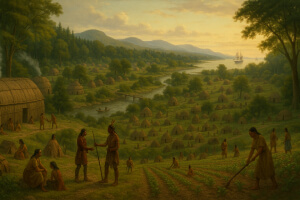
Before European settlers arrived, the Americas were home to diverse indigenous civilizations with complex societies, trade networks, and cultural practices. Tribes such as the Iroquois, Cherokee, and Sioux developed political structures and agricultural systems that sustained their communities for generations. Understanding these societies is essential for appreciating the roots of American culture and the profound impact of colonization.
Starting as early as the 16th- and 17th-century, the European colonization started off with the colonies established by the Spanish, French, and English along the Atlantic coast and into the interior. These early settlements will bring changes, which will do good, like trade, new governance structures, while diseases and conflicts led to displacement and decreased native inhabitants. Out-of-colonization came those economic and political structures, which would eventually structure the Americans generals.
The Road to Independence
In 1776, the Declaration of Independence became a defining moment in American history, formally declaring the colonies’ right to self-governance and laying out fundamental principles of freedom, equality, and democracy. The revolutionary conflict that followed, known as the American Revolutionary War, challenged these ideals through years of struggle, hardship, and military engagement. By 1783, with the signing of the Treaty of Paris, Britain officially recognized the independence of the United States, securing victory for the revolutionary cause. This pivotal period not only established the nation’s sovereignty but also laid the foundation for a government based on representation, civic responsibility, and the protection of individual liberties.
Building a Nation: Constitution and Early Governance
Following independence, the United States faced the challenge of establishing a stable government. The Articles of Confederation initially provided a loose framework but revealed weaknesses in central authority and coordination between states.
The Constitutional Convention of 1787 addressed these issues, producing the U.S. Constitution, which created a federal system balancing state and national power. The Bill of Rights, ratified in 1791, guaranteed individual liberties and became a cornerstone of American law. Early governance also included establishing financial systems, diplomatic relations, and domestic policies that would guide the young nation through its formative years.
Expansion and Conflict
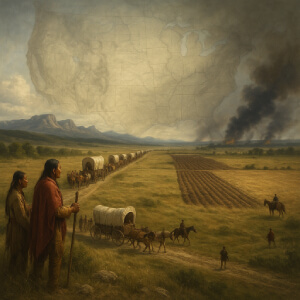
The period between 1900 and 1949 was one of the epic battles; territorial expansion, economic advancement, and various social stresses characterized this period; the Louisiana Purchase, migration across the continent, and Manifest Destiny were all reflected data of rising eagerness inside the U. S.'s high governance.
The drive to acquire land and expand the empire always placed the nation far ahead of itself in conflicts. This resulted in turmoil with the indigenous peoples of America and other particular instances-admirably the controversies over slavery and dispute about federal versus state rights.
The former has resulted in the Civil War (1861-1865), which in principle won over the abolishment of slavery, only to leave indelible marks on the fabric of the nation. The Reconstruction that ensued aimed to push civil rights, political inclusion, and the reintegration of Southern states further, thus determining social and political conditions for centuries.
Cultural Development and Social Change
The American culture developed hand in hand with political and economic changes. The 19th and early 20th centuries bore witness to a tide of literature, music, and fine arts of social connection. These had inspired authors like Mark Twain and Emily Dickinson to interlink human experience, while music-Creole with genres like jazz and blues-borne by African American communities-played their part promoting cultural exchange both nationally and internationally.
Social movements were ordered supreme significance in carving out American identity. Women's rights movements, labor rights, civil rights, and immigrant rights movements have marked their epochs in the fight for equality and justice. These cultural and social developments provide insight into the dynamic interplay between creativity, identity, and political activism throughout American history.
Understanding America Through Its History
Whether through
Related Topics
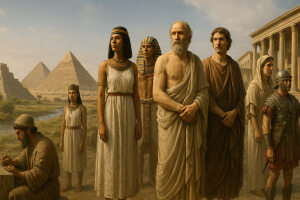
Ancient and Classical History: Civilizations, Mythology, and Cultural Origins
Ancient and classical history provides one of the first windows into human civilization. It is the foundation of culture and belief systems and societal structures that have continued to determine the contours of the modern world. From the rise of early civilization to the intellectual achievements of classical societies, the period boasts many tales of mythology, heroes, governance, and cultural practices. A brief survey of some of the significant features reveals much about law, art, religion, and social norms, which have an impact on the human experience through many generations.
Continue Reading...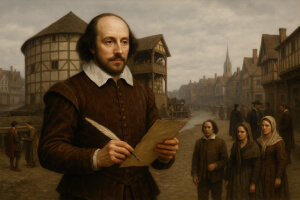
The World of Shakespeare: Genres, Themes, and Lasting Influence
William Shakespeare is widely considered to be one of the most important writers in the English language. His plays, writings, and poems reflect a tradition that has survived for more than four hundred years. It is important to read Shakespeare effectively in order to examine his genres, the usual themes of his drama and passions, and the historical and cultural context of his age-along with contemporary rethinking of his work. This page offers a comprehensive introduction for the reader interested in the timeless relevance.
Continue Reading...
Classic Literature: Archetypes, Themes, Influential Authors & Critical Interpretation
Classic literature represents the enduring works of the literary canon, reflecting the values, struggles, and imagination of past societies. These works, spanning poetry, novels, plays, and essays, have influenced generations of writers and readers, offering insights into human nature, culture, and morality. Understanding classic literature requires examining its archetypes, recurring themes, influential authors, and the critical interpretations that continue to shape our reading today.
Continue Reading...
Art History: Influential Artists, Movements, Architecture & Cultural Works Across Eras
Art has always existed as a reflection of the human condition, culture, and perhaps what human beings feel. The gamut of art, from cave drawings through contemporary installations, has largely been a process of reflection-the history of art reflects on the evolution, belief and humanity's creative endeavor; it tells us how various societies have conveyed their ideas, celebrated their memories, or set norms through visual culture. Such discussions expand toward some artist and movements including avant-garde and architecture and culture. These are naturally critical concerns from one realm of activity to another in our modern universe.
Continue Reading...Quick Links
Teaching FORM through Lady Macbeth’s tragic arc has really helped my students to see how Shakespeare builds tragedy through character. It’s been a game-changer for their analytical writing and for pushing students towards grade 8&9.#teamenglish #macbeth #gcseenglish #literature pic.twitter.com/34SMhdu3dc
— Abena Appiah (@AbenaAppiah) December 4, 2025
Quick weight loss sounds tempting — keto hacks, protein shakes, extreme diets… but what’s the real cost? 😳
— B L Mittal (@blmittal01) December 7, 2025
Dr. Rahul Jain breaks down the hidden dangers behind “fast results” and why safe, sustainable weight loss always wins.#HealthFirst #DietRealityCheck #WeightLossFacts pic.twitter.com/OGyipeCdX3